

Connect a GitHub repository
Use the App’s Deploys section to connect the repository that contains the code for that App.
Connecting a repository makes Git available as a deploy source. It doesn’t deploy code, disable Workspace deploys, change the framework or resource shape, choose a branch, or enable automatic deploys.
Before you begin
Section titled “Before you begin”You need:
- a provisioned synsmarts App;
- a Team owner or admin role;
- permission on GitHub to install or update a GitHub App for the repository’s organization or personal account.
The synsmarts Deploy GitHub App uses installation access. synsmarts doesn’t ask you to paste a personal access token or repository password.
Start from Deploys
Section titled “Start from Deploys”- Open the App in the synsmarts portal.
- Select Deploys.
- In How this app deploys, select Connect a repo.
- On Connect GitHub, select Continue to GitHub.
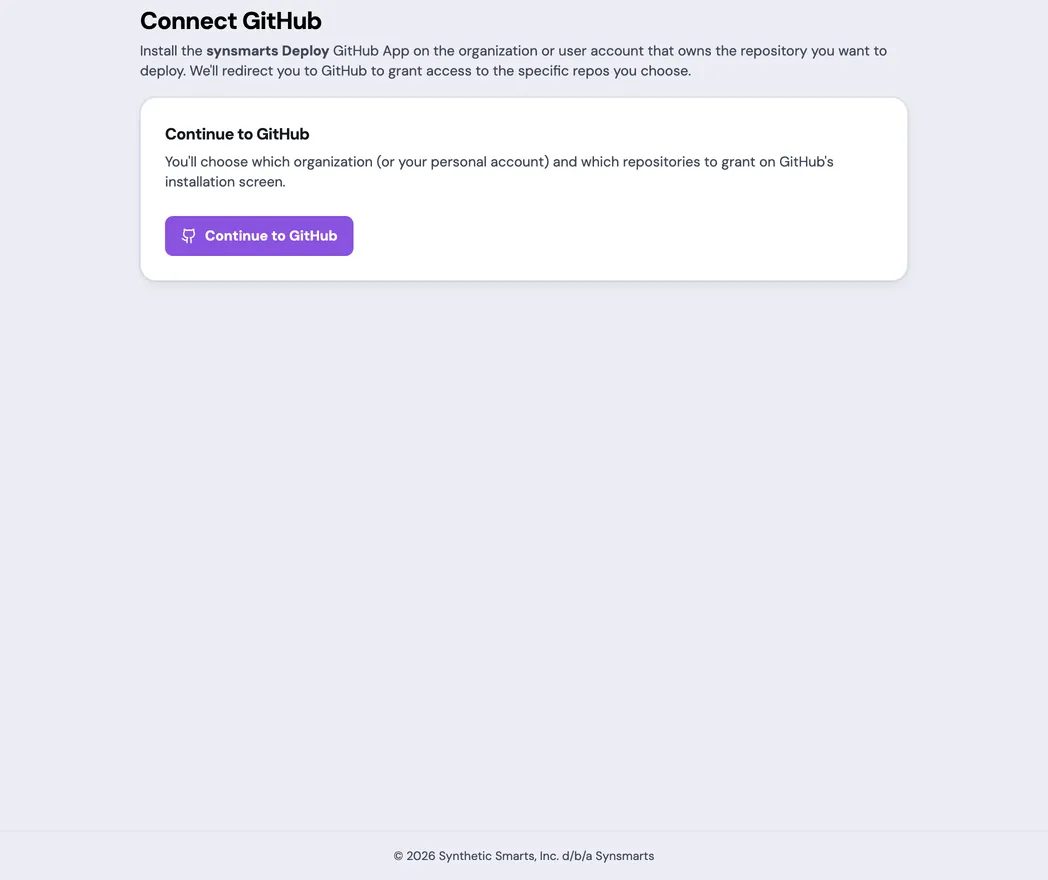
If the portal can’t load the App details, return to Deploys and retry after provisioning finishes. Only owners and admins see the connection action.
If GitHub doesn’t open after you select Continue to GitHub, disable any pop-up or navigation blocker for the portal and try again.
Choose a GitHub installation
Section titled “Choose a GitHub installation”GitHub opens the installation screen for the synsmarts Deploy App.
- Choose the organization or personal account that owns the repository.
- Grant access to the required repository. Use repository-specific access when the App doesn’t need every repository in the account.
- Complete the GitHub installation or update.
GitHub returns you to synsmarts. If the Team has more than one active installation, the Choose a GitHub account screen lists them. Select Deploy from account for the account that owns the repository; synsmarts doesn’t guess based on the most recent installation.
Select the repository
Section titled “Select the repository”- On Select a repository, choose the repository.
- Select Connect repo.
The repository is connected to the existing App, and the portal returns to Deploys. A green Connected status confirms that the GitHub installation is active.
One repository can back more than one App. The repository picker shows other Apps already using that repository. When multiple Apps use it, use a different branch or tag per App unless you intentionally want the same push to release more than one App.
If the repository is missing
Section titled “If the repository is missing”If no repositories are shown, or the required repository is absent:
- Open the GitHub installation settings for the synsmarts Deploy App.
- Add the required repository to the installation.
- Return to synsmarts and restart from Connect a repo.
Confirm that you selected the correct GitHub account when the Team has multiple installations. Repository access granted to one installation isn’t available through another.
Deploy after connecting
Section titled “Deploy after connecting”Connecting returns to Deploys without releasing code. In Deploy now, select the branch, tag, or exact commit to release, then select Deploy.
Automatic deploy remains off until a Team owner or admin enables Auto-deploy when I push and saves an exact branch or tag.
Update GitHub access
Section titled “Update GitHub access”If the Deploys page shows Reconnect needed, open the connection action and reinstall or reactivate the GitHub App for the repository owner. Grant access to the required repository and return to synsmarts.
Updating an installation restores repository access; it doesn’t start a deploy or re-enable a previously disabled automatic-deploy setting by itself.
Prepare the first deploy
Section titled “Prepare the first deploy”After the repository is connected:
- Confirm that Connected repo shows the expected
owner/repository. - In Deploy now, keep Git selected.
- Confirm the branch or tag. The picker initially uses the repository’s default branch.
- Select Deploy and follow the deploy detail page to a terminal result.
Disconnecting later
Section titled “Disconnecting later”Disconnecting a repository makes Git unavailable for new deploys. Workspace deploys remain available. Treat disconnect as a deliberate operational change, not a troubleshooting step for a failed deploy. It also clears the App’s automatic-deploy configuration. Existing deploy history and the currently served release remain visible.